Photos of Sahara desert camps make them look impossibly romantic — and honestly, they mostly live up to it. But between the marketing images and the reality there are a few practical details worth knowing before you book: what the tents are actually like, how cold it gets, and where the bathroom is.
Standard vs luxury camps (comparison)
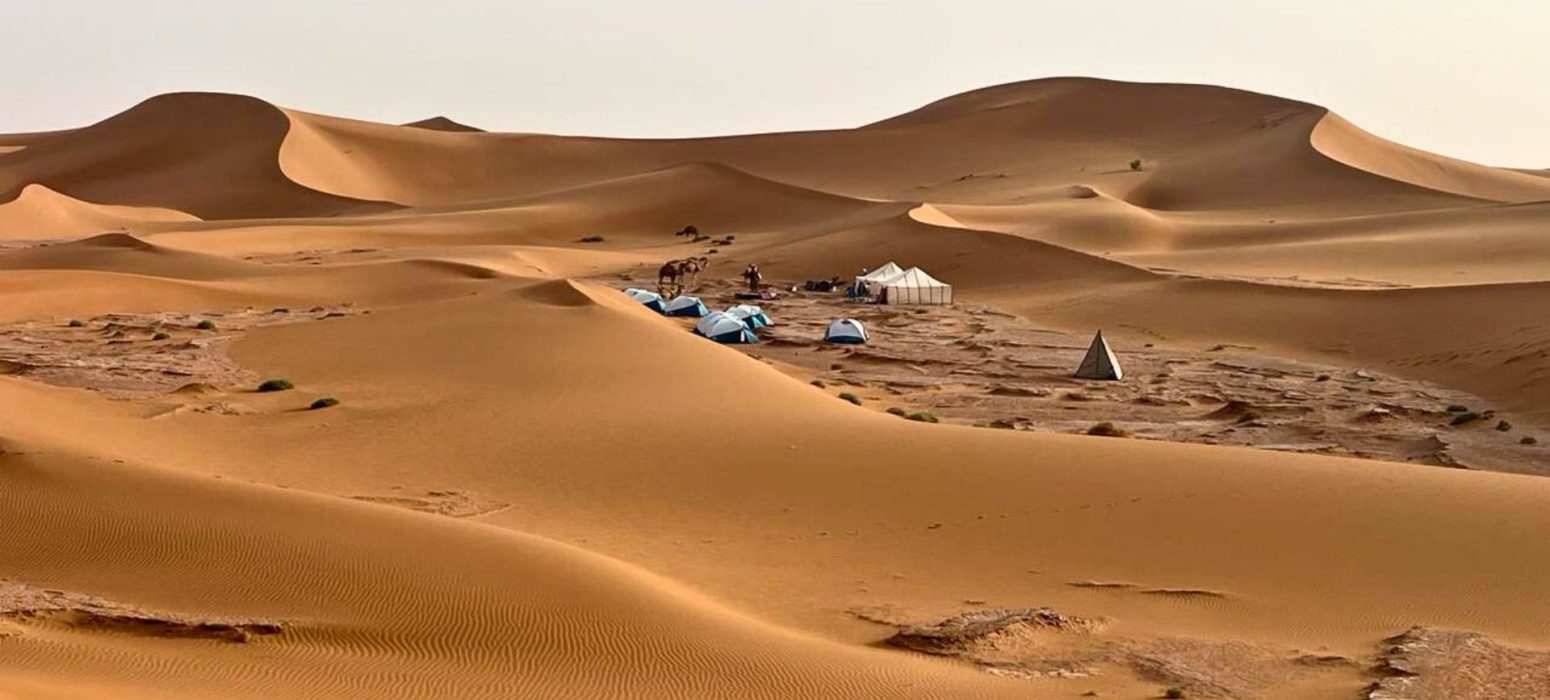
Standard camps offer shared or private canvas tents with simple beds, blankets, and shared bathroom facilities a short walk away. Luxury camps ("glamping" style) offer larger tents with proper beds, private en-suite bathrooms, sometimes electricity and even small pools at the edge of the dunes, at a noticeably higher price. Both serve a similar dinner-drumming-stargazing evening; the difference is comfort level, not the core experience.
Inside the tent: beds, bedding, power
Expect a real mattress (not a sleeping bag on the ground) with sheets and heavy blankets — camps know nights are cold and over-provide blankets rather than under-provide. Most standard camps run on generator power for a few evening hours only, or none at all; luxury camps often have limited electricity or solar lighting. Don't expect to charge devices reliably overnight — charge before you arrive.
Bathrooms and showers
Luxury camps typically have en-suite bathrooms with hot showers. Standard camps usually have shared toilet blocks a short walk from the tents, with basic (sometimes cold or lukewarm) showers — perfectly fine for one night, just not hotel-standard. Bring a headlamp for the walk after dark.
Dinner, breakfast and dietary needs
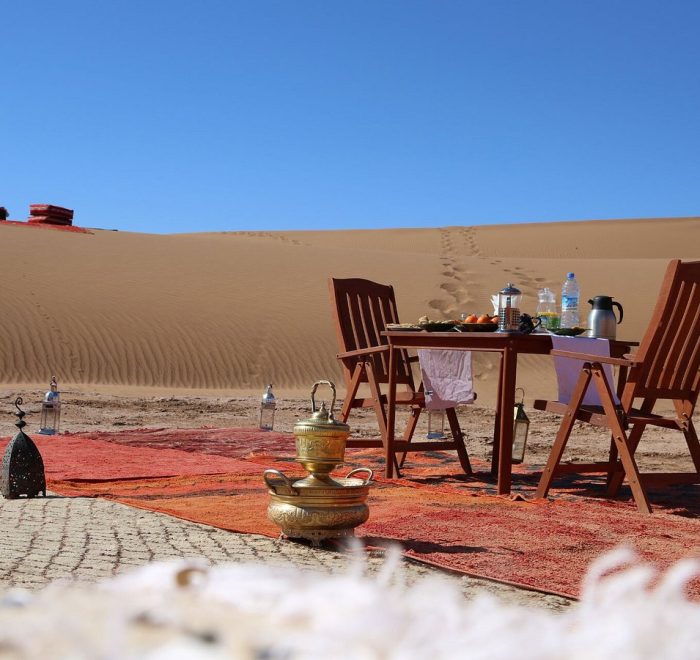
Dinner is typically a multi-course Moroccan meal — soup, tagine, fruit — eaten communally, often followed by mint tea. Breakfast is simple: bread, jam, eggs, tea and coffee. Vegetarian and most common dietary requirements can usually be accommodated if you flag them when booking, though options in a remote camp are naturally more limited than in a city restaurant.
Evening drumming and stargazing
After dinner, camp staff typically play traditional Berber drums and songs around a fire, and guests are often invited to join in. Once the fire dies down and camp lights dim, the real highlight begins: with no light pollution for miles, the night sky over Erg Chebbi is one of the clearest most travellers will ever see — see our separate stargazing guide for how to make the most of it.
How cold does it get at night?
This surprises people more than anything else: desert nights, even after a hot day, can drop close to freezing in winter (Dec–Feb) and remain cool even in spring, autumn and summer. The lack of humidity means heat escapes fast after sunset. Camps compensate with heavy blankets, but dress in layers rather than relying on bedding alone.
What to bring into camp
A headlamp, a warm layer even in "warm" months, any medication you need overnight, a power bank (charged in advance), and a basic overnight bag — full suitcases usually stay at your hotel or in the vehicle.
FAQ
Is there wifi in the desert camp? Rarely, and mobile signal is patchy — treat the night as a digital detox.
Are the bathrooms clean? Yes, though standard camps are basic rather than luxurious; luxury camps offer full en-suite comfort.
Is one night in camp enough? For most travellers, yes — it's long enough to experience sunset, dinner, stars and sunrise without needing more.